What is isatuximab?
Isatuximab is a monoclonal antibody directed against myeloma cells.
Antibodies are proteins that the body creates to recognise and fight foreign substances (e.g. viruses and bacteria). Monoclonal antibodies are lab-made antibodies engineered to mimic human antibodies and bind to specific targets on myeloma cells to recruit the body’s immune system to kill the myeloma cells. Immune cells do this by secreting special molecules that can kill the myeloma cells.
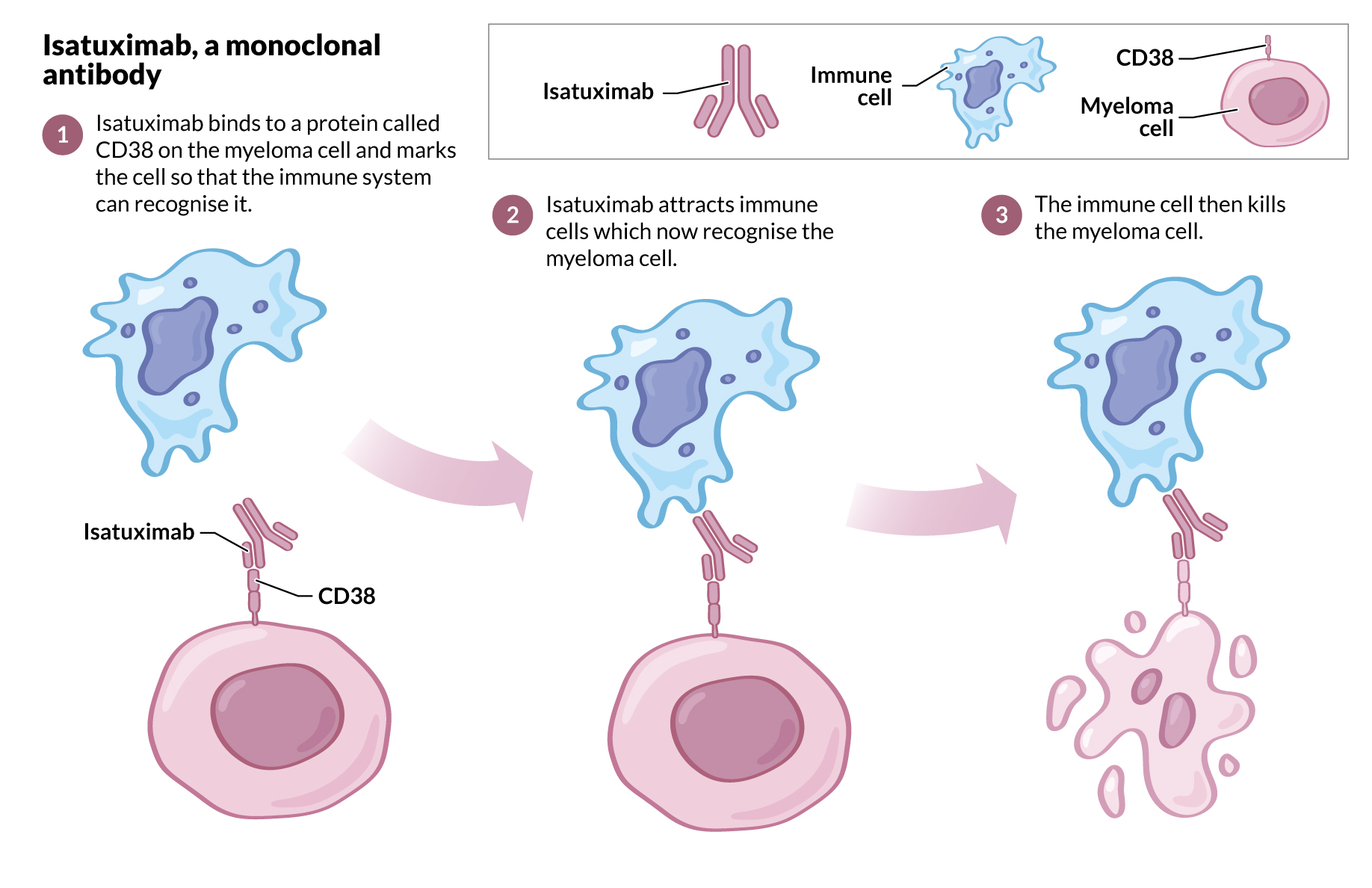
Isatuximab binds to a protein called CD38, which is present on the surface of myeloma cells. Once isatuximab binds to the myeloma cell through CD38 it can kill the myeloma cell by itself, as well as activate immune cells to help destroy the myeloma cell.
How is isatuximab used to treat myeloma?
Isatuximab is used in many different settings across the myeloma treatment pathway, usually in combination with other myeloma medicines. Below, we highlight the indications that are approved in the European Union.
In newly diagnosed myeloma patients, it is usually given as either:
- Isatuximab with bortezomib, lenalidomide and dexamethasone (referred to as Isa-VRd) in patients who are not eligible for autologous stem cell transplantation (ASCT).
- Isatuximab with bortezomib, lenalidomide and dexamethasone (referred to as Isa-VRd) for the starting treatment (induction therapy) in patients who are eligible for ASCT.
In myeloma patients who did not respond to previous myeloma therapy, or whose myeloma worsened (relapsed and/or refractory), it is given as either:
- Isatuximab with pomalidomide and dexamethasone (referred to as Isa-Pd)
This combination is for patients who received at least two prior therapies, including treatment with lenalidomide and a proteasome inhibitor (such as bortezomib) and whose myeloma worsened during or shortly after their last therapy.
Isatuximab with carfilzomib and dexamethasone (referred to as Isa-Kd) in patients who received at least one prior therapy.
How is isatuximab given?
Isatuximab can be given either as an intravenous (IV) infusion (a drip into a vein) or as a subcutaneous (SC) injection (under the skin). The medicine is given at a hospital outpatient department or clinic.
When given by IV infusion, the dose of isatuximab will depend on your weight. When given subcutaneously, patients are given a fixed dose (the same dose for all patients), either as an injection by a healthcare professional or through an on-body injector (OBI) device.
How often and for how long is isatuximab given?
How often you receive daratumumab depends on the following:
- Your specific treatment combination
- Your indication (i.e. newly diagnosed or relapsed/refractory myeloma)
- Whether you can have a stem cell transplant or not
- If you are not having an autologous stem cell transplant, treatment is long-term. Usually, isatuximab is given once a week (for the first few weeks), then every two weeks and then your doctor may change this to monthly until the myeloma gets worse.
- If you are having an autologous stem cell transplant, treatment is short-term. Isatuximab is given over 18 weeks. It will be given once every week for the first month, and then once every two weeks for the remaining time. The treatment is then stopped so you can receive high-dose chemotherapy followed by your stem cell transplant.
Your doctor may recommend less frequent treatment if you experience certain side-effects.
What are the benefits of isatuximab?
Several clinical trials have explored the benefits of isatuximab in combination with other myeloma medicines.
Clinical trials consistently find that adding isatuximab to standard treatments for myeloma leads to better outcomes for patients.
In patients with newly diagnosed or relapsed/refractory myeloma, those who received isatuximab generally lived longer and had their disease under control for longer. Isatuximab helped delay the progression of myeloma. It also made the standard treatments more effective by reducing myeloma cells to very low or undetectable levels. These benefits were seen in patients with and without autologous stem cell transplant.
What side-effects may occur?
Here we describe the most common side-effects of isatuximab. Unless specified otherwise, these happen in more than one in ten patients receiving isatuximab in combination with other myeloma medicines.
However, isatuximab is generally well tolerated and you are unlikely to experience all of these side effects. Side effects vary from person to person and are often manageable with support from your healthcare team. Most of the side effects listed below are seen across all treatment combinations.
If you notice any new or worsening symptoms, or anything that might be
a side effect of isatuximab, tell your doctor or healthcare team immediately. They can help you manage it.
Infusion-related reactions
Some patients may have an allergic-like reaction when they receive isatuximab as an intravenous infusion (IV). Local rash or redness might appear at or near the infusion site. This usually develops within minutes or hours but may develop up to a day (24 hours) after treatment.
The reaction is rarely severe. You will receive medications beforehand to help prevent this reaction and the medical team will monitor you closely. Your doctor or nurse may choose to temporarily pause, reduce the infusion rate, or completely discontinue the infusion of isatuximab.
Symptoms can include a cough, chills, difficulty breathing and nausea (feeling sick). Some patients may also experience a runny or blocked nose, sore throat and vomiting.
You should contact your doctor or healthcare team immediately if you think you may be having a reaction.
Infections
As a result of treatment with isatuximab, you are at a higher risk of developing certain infections, which can give you a high temperature (i.e. fever) and make you feel unwell. While isatuximab targets myeloma cells, it can also kill normal immune cells and lower antibody levels that help fight germs. This makes it harder for your body to protect itself against infections.
Specific infections might include:
- COVID-19. Vaccination against SARS-CoV-2 can help prevent COVID-19.
- Infections of the nose, throat and sinuses (upper respiratory infections)
- Pneumonia (infection of the lung). Common signs of pneumonia include high or low temperature, coughing (which may include coughing up yellow or green mucus) and wheezing, shortness of breath, fatigue, loss of appetite and confusion. To prevent or treat infections, your doctor might prescribe antibiotics (medicines that treat bacterial infections). In severe cases, you may also need to stay in hospital and be given oxygen to help you breathe. Vaccinations against streptococcus pneumoniae (a type of bacteria that causes pneumonia) and respiratory syncytial virus (RSV) can help prevent pneumonia.
- Bronchitis (inflammation of the airways in the lungs), occurs when the lining of your bronchial tubes becomes inflamed. These tubes are part of your airways and carry air into and out of your lungs. Usually, bronchitis is caused by viruses that cause colds and flu. Symptoms include coughing, a sore throat, fatigue, chest discomfort, shortness of breath and wheezing. Annual flu vaccinations can help prevent bronchitis as many cases arise from flu infections.
Because isatuximab can affect the immune system, viruses already in your body – including the one that causes shingles – may become active, even if you have been vaccinated. Your doctor may recommend antiviral medication to help prevent this.
While you are taking isatuximab you should take precautions to help avoid infections. This might include washing your hands more often and avoiding large, crowded places. Vaccination can help prevent infections. See our resources on infection prevention. When you are taking isatuximab, it is important to seek medical assistance immediately if you develop cold or flu-like symptoms, start to feel unwell and/or have a high or low temperature, as this is usually caused by your body’s response to an infection.
Blood changes that increase your risk of infection
You are at more risk of infection while receiving isatuximab because of changes in your blood and immune system that might make it more difficult for you to fight off infections.
Low levels of white blood cells (leukopenia)
Neutropenia and lymphopenia mean a low level of different white blood cells (called neutrophils and lymphocytes), which are important for the immune system and fighting infections. If your white blood cells count is low, you are more likely to catch an infection and become unwell. It might also take longer for you to get better after an infection. Your doctor will take your blood before and during treatment to monitor your white blood cell levels.
In severe cases, neutropenia can be treated with G-CSF (Granulocyte Colony-Stimulating Factor). G-CSF is a medication that stimulates cell growth and can help the bone marrow make more neutrophils to help fight infections. It is injected under the skin (subcutaneously).
Other blood changes
Low platelets (increased risk of bleeding)
Thrombocytopenia means you have a low platelet count. Platelets (also known as thrombocytes) play an important role in slowing or stopping bleeding (i.e. blood clotting) and healing wounds. A low number of platelets can increase your risk of bleeding. Your doctor will check your blood (including platelet levels) before and during treatment. If you experience abnormal bruising or bleeding (e.g. from your gums, nose or after tests), you should inform your doctor. If severe, this may be managed through dose delays. It might also be possible to use platelet transfusions, which are given by an infusion. Your doctor may recommend following some advice to avoid injury and bleeding.
Low level of red blood cells (anaemia)
This may affect up to one in ten patients. Anaemia means that you have a low level of red blood cells or low level of haemoglobin. Red blood cells play an important role in carrying oxygen around your body. If you have a low level of red blood cells you might lack energy and feel weak, fatigued, breathless or light-headed. You may also have noticeably paler skin than normal.
Your doctor will take your blood before and during treatment to monitor your red blood cell levels. However, if you experience these symptoms at any point, you should speak to your doctor. Treatment for anaemia may include iron tablets, blood transfusions (which give you extra red blood cells) or a drug called erythropoietin (EPO). EPO can help your body make extra red blood cells.
Fatigue
Fatigue is a feeling of extreme and persistent tiredness, which may not be relieved by rest. As with all side effects, you should tell your doctor or nurse if you are feeling fatigued. Treating other side effects can help with this.
For example, your fatigue may be caused by a low number of red blood cells (anaemia – see above). If this is treated, you might start to feel less tired. Your doctor might also be able to reduce the dose of certain drugs if they are a contributing factor.
Small amounts of easy exercise and periods of rest can also help. Planning and anticipating your daily activities can help manage your fatigue, planning rest periods during the day – particularly after more strenuous activities.
Gastrointestinal disorders
Diarrhoea
Diarrhoea is where someone has three or more loose stools (i.e. bowel movements) every day. Having a balanced diet can help with this symptom, as can avoiding foods that upset your stomach like fatty and spicy food and avoiding fruit juice. If you have diarrhoea, make sure you drink plenty of water each day – around 2 to 3 litres each day. Your doctor may also prescribe you medicines to help control your diarrhoea, called anti-diarrhoeals.
Nausea
Nausea is when someone has an unpleasant urge to vomit. If you vomit, it is very important to stay hydrated by drinking water (with dissolved electrolytes). Try to take small sips if you feel unable to drink normally. Anti-emetics are anti-sickness drugs, which you may be prescribed to prevent or stop your nausea and sickness.
Constipation
Constipation is a bowel dysfunction that makes bowel movements infrequent or difficult to pass. Stools are often hard. Symptoms can include abdominal pain. Your doctor may prescribe you constipation treatment or recommend dietary changes. Staying hydrated is important.
Other very common side-effects which may affect more than 1 in 10 patients are:
- Cough
- Decreased appetite
- High blood pressure (hypertension)
- Shortness of breath
- Vomiting
Side effects associated with specific treatment combinations
Some side effects may be linked to other medicines given alongside isatuximab, for example, steroids or certain chemotherapy drugs. Your healthcare team can explain which side effects are most relevant for your treatment.
Cataract (clouding of the eye lens)
Isatuximab, together with bortezomib, lenalidomide and dexamethasone (Isa-VRd), can cause clouding of the lens of the eye – this is known as a cataract. Cataracts can blur your vision, making everyday tasks like reading or driving at night more challenging. Cataracts usually develop gradually. If you experience any blurred or double vision, or increased sensitivity to light, consult your doctor to discuss how these side effects can be managed and treated.
Irregular heartbeat (atrial fibrillation)
You may experience an irregular heartbeat – also known as atrial fibrillation – when taking isatuximab together with pomalidomide and dexamethasone (Isa-Pd). This can affect up to one in ten people, so it is important to inform your nurse or doctor about any heart issues you have or are experiencing. Call the emergency number of your country if you feel any chest pain or tightness in your chest.
Questions or concerns
If you have any concerns about your treatment or symptoms, you should speak to your doctor or healthcare team immediately.
What is isatuximab (Sarclisa®)?
Isatuximab is a monoclonal antibody (mAb, a laboratory manufactured antibody) drug indicated together with pomalidomide and dexamethasone for the treatment of multiple myeloma. It is administered to adults who have received at least two previous lines of therapy, including lenalidomide and a proteasome inhibitor, and whose myeloma has progressed since receiving the last treatment 1,4. Isatuximab is also recommended in combination with carfilzomib and dexamethasone, for the treatment of adult multiple myeloma patients who have received at least one prior line of therapy 2,4.
As multiple myeloma is considered a ‘rare disease’ because it affects such a small number of people, isatuximab was granted ‘orphan drug designation’ by the European Commission in 2014. An orphan drug designation is a status assigned to medicines developed for rare disease conditions that affect fewer than 5 patients per 10,000 inhabitants in the EU1. It received a marketing authorisation valid throughout the EU on 30 May 20203.
How does isatuximab work?
Isatuximab binds to the CD38 protein, which is present on the surface of myeloma cells. By binding to this protein, isatuximab induces the death of myeloma cancer cells (also called apoptosis). Also, by binding to the CD38 protein on the surface of the myeloma cell, isatuximab activates the immune system by marking the myeloma cells for destruction2.
What are the benefits of isatuximab?
The safety and efficacy of isatuximab has been evaluated in several studies. In the ICARIA-MM study4 that included 307 participants, isatuximab was administered in combination with pomalidomide and dexamethasone. Patients who received isatuximab lived about 12 months without worsening of their myeloma, while for patients who did not receive isatuximab this lasted about 6 months.
What are the side-effects of isatuximab?
The most common side effects of isatuximab are1,2,3,4:
- neutropenia (low levels of neutrophils, a type of white blood cell also known as an immune cell)
- infusion reactions (occur during or shortly after infusion)
- pneumonia (infection of the lungs)
- upper respiratory tract infection (such as nose and throat infections)
- diarrhoea
- bronchitis (inflammation of the airways in the lungs)
The most common serious side effects are pneumonia and febrile neutropenia (low white blood cell counts with fever).
How and when is isatuximab given?
Isatuximab is given by infusion (drip) at a dose of 10 mg/kg of body weight once per week for the first cycle of treatment. Cycles are defined as periods of treatment (usually 28 days). After the initial cycle, one dose of isatuximab is given every two weeks. Before infusion, patients may be given medicines to reduce the risk of infusion-related reactions. The doctor may slow down the infusion or stop treatment in case of infusion-related reactions2.
References
For a full list of references used to inform this factsheet, please email info@mpeurope.org.