
From diagnosis and over the course of your myeloma, many decisions and choices will need to be made about your health and care. Watch the short video below to learn more about shared decision-making and how patients and their families can work together with healthcare professionals to discuss treatment options, preferences, goals, and concerns.
Your voice matters
Find further information below:
Myeloma (also known as multiple myeloma) is a type of blood cancer that starts in the bone marrow, where blood cells are made. It affects plasma cells, a type of white blood cell that usually produce helpful proteins, called antibodies, that help fight infection. However, when myeloma develops, the bone marrow makes plasma cells that do not work properly and divide uncontrollably. The abnormal plasma cells build up in bone marrow and produce unhelpful proteins. This leads to symptoms including bone pain, fatigue/tiredness, infections, and kidney problems.
While there is still no cure for myeloma, the development of new treatments has meant that it is often seen by medical professionals as a chronic, long-term disease for some patients.
Myeloma patient guide
This guide provides answers to most of the things you want to know about myeloma: how it may affect you, what treatments you may have and how much or how little will change in what you are able to do.
Myeloma treatments factsheets

MPE has developed a series of factsheets for patients and patient advocates covering treatment for myeloma. These contain essential information about treatments and medicines, so that patients can feel safe and informed when asking their doctor specific questions.
Do you want to access support?
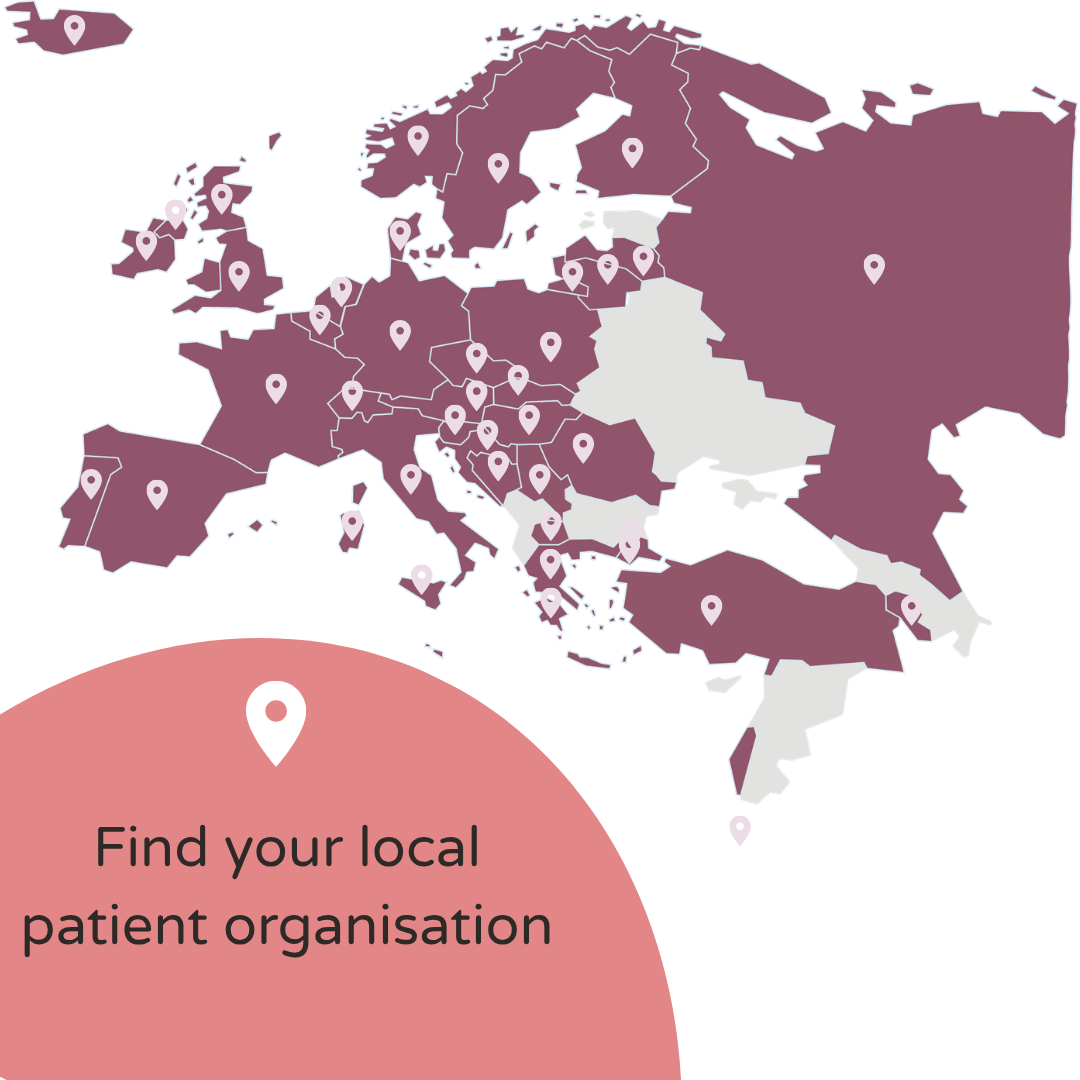
Whether you are newly diagnosed, undergoing treatment, or living with myeloma long-term, MPE and national patient organisations can help you and your family find the information and emotional support you need.
Find your local patient organisation here:
Are you interested in being involved in future research?
Please contact us at research@mpeurope.org.
The Ask 3 Questions flyer developed by MPE was adapted from the MAGIC programme, supported by the Health Foundation. Ask 3 Questions is based on Shepherd HL, et al. Three questions that patients can ask to improve the quality of information physicians give about treatment options: A cross-over trial. Patient Education and Counselling, 2011;84: 379-85.